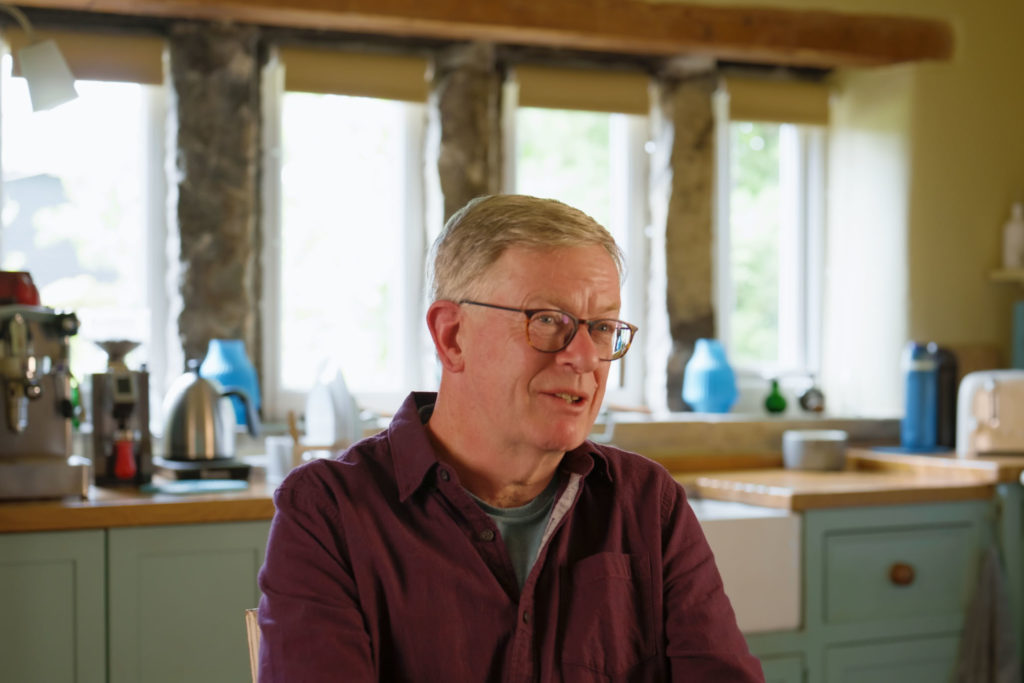
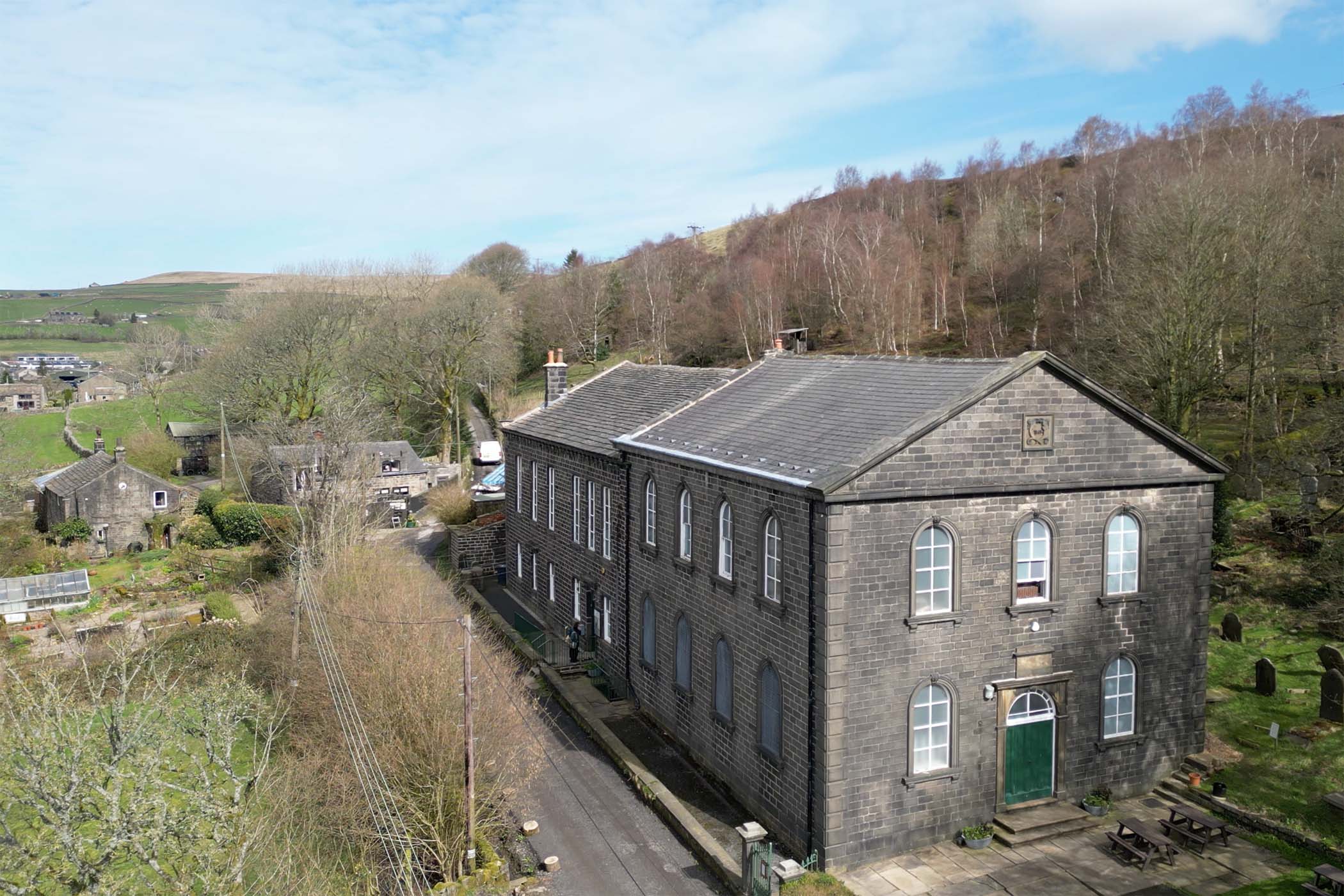
Tony’s property is an older stone house situated 300 metres up on a hill in the Yorkshire Pennines.
While the location is beautiful, the high elevation leaves the home exposed to severe weather, including horizontal rain, winds, and extreme cold. The building features thick solid walls with no air gaps, and a traditional Yorkshire stone roof.
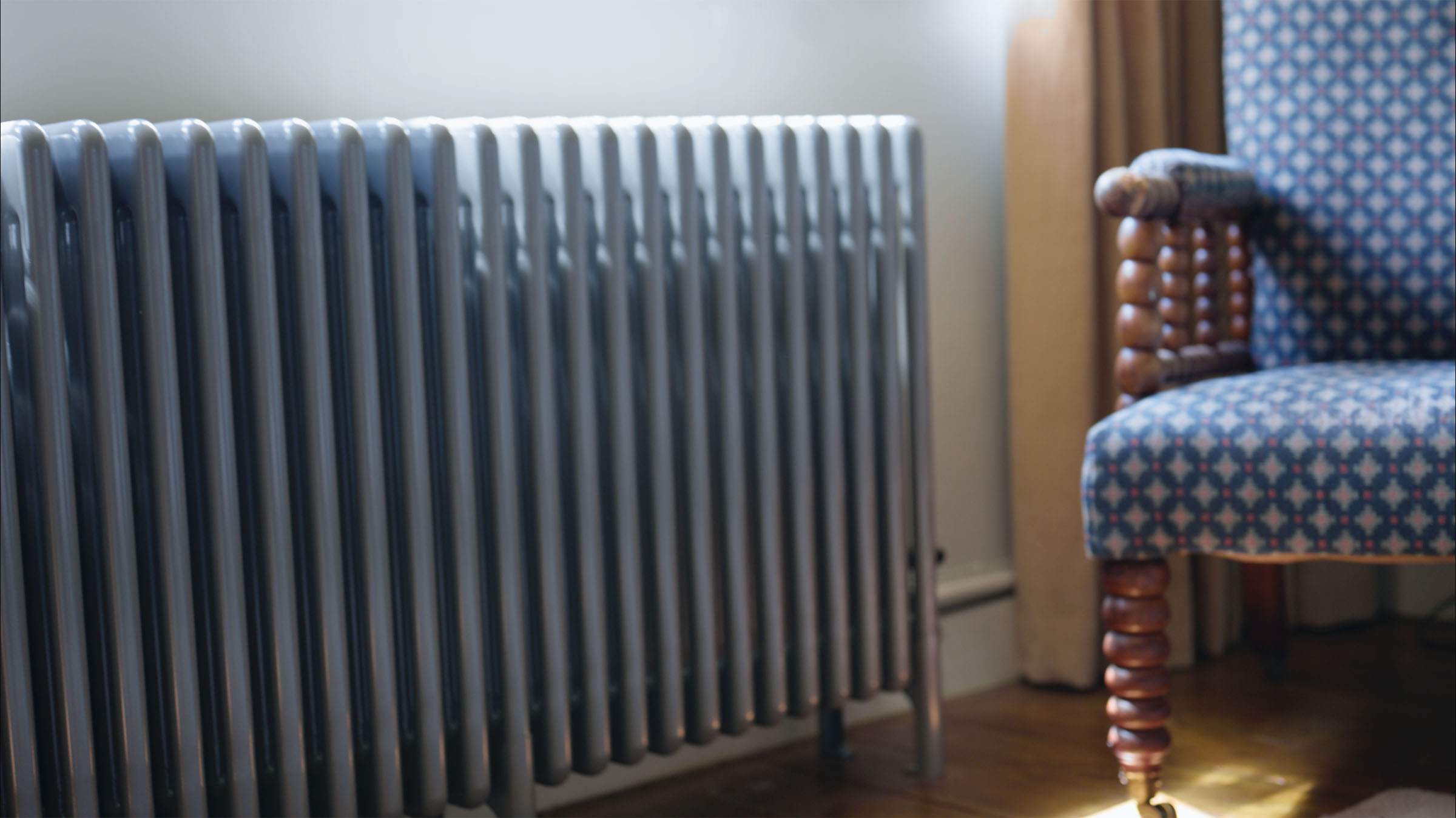
The home was previously heated by a combi boiler and original cast iron radiators. Because the radiators were undersized, the house often felt cold and damp for most of the year, despite the boiler running at high temperatures and consuming significant energy.
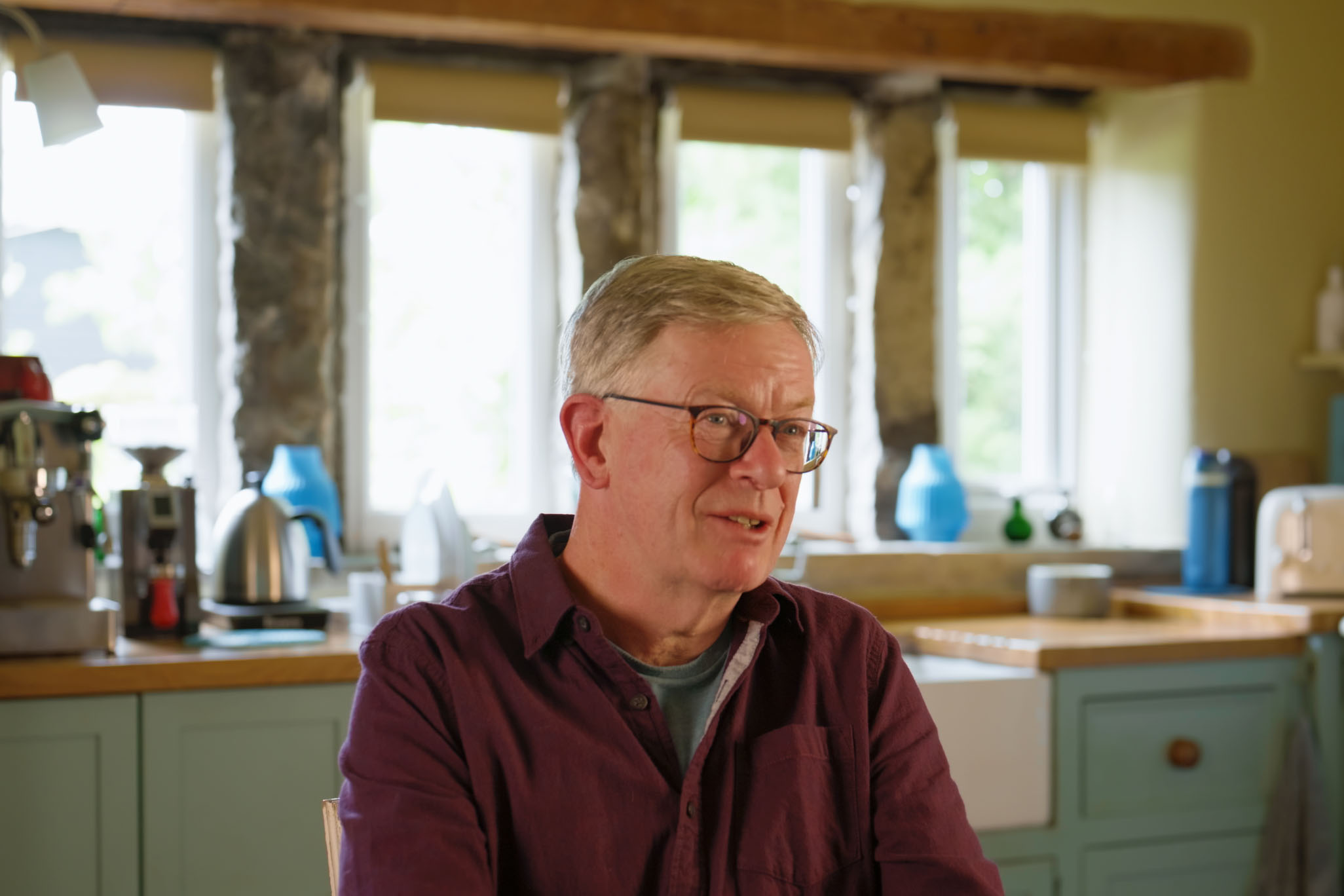
“I live 300 metres up on top of a hill in the Pennines. It presents challenges for the central heating.”
Tony
The goals
Tony’s desired outcome was a balance of environmental sustainability and energy savings, though he was willing to accept a cost-neutral result.
Crucially, he refused to compromise the home’s original aesthetic; the new solution had to work without adding internal wall boarding or destroying his recent decorative refurbishments.
He initially received advice from other suppliers that older, uninsulated stone properties were not suitable for heat pumps.
Tony wanted to prove this initial advice wrong but needed a trusted installation partner who was willing to treat his home as a unique challenge, rather than offering a generic solution.
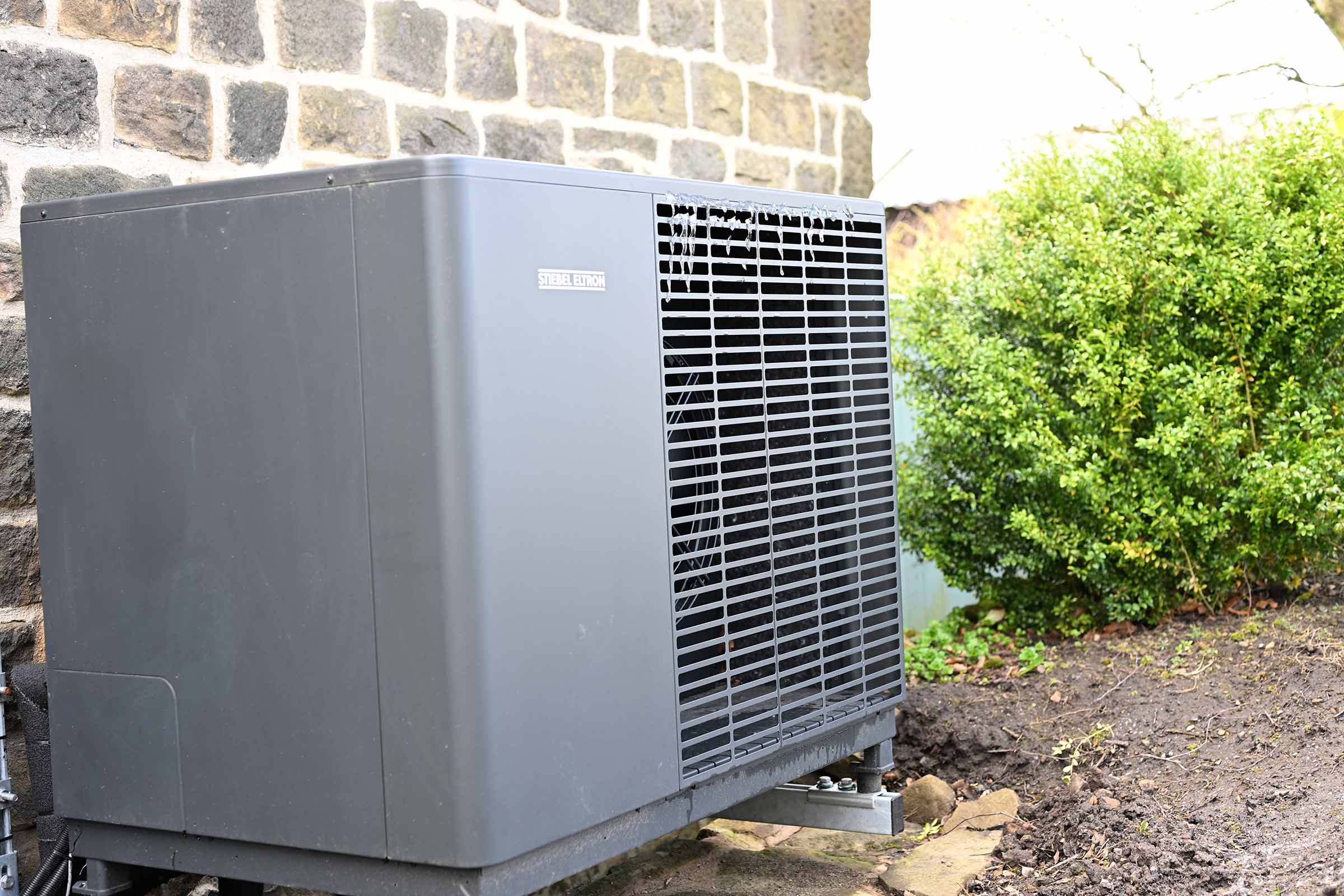
Additionally, because the property is in a quiet rural area, Tony was highly concerned about the potential noise of an air source heat pump.
Tony then reached out to Halifax Renewables.
Working together
Tony and Halifax Renewables formed a deeply collaborative partnership from first contact.
Steve conducted meticulous heat loss calculations to ensure the system could handle the property’s wind chill.
To alleviate Tony’s concerns about noise, Steve arranged for him to visit a live installation and listen to the unit first-hand.
To maintain the home’s aesthetic, they sourced specific modern column radiators that mirrored traditional cast iron designs, sized perfectly to provide the correct heat output for the heat pump’s lower flow temperatures.
Tony was satisfied that he would not sacrifice the beauty of his home for modern comfort.
Installation
The installation was completed in stages during the autumn of 2025.
The most significant hurdle was finding space for a hot water cylinder. The refurbished property had no available space, and building externally or damaging the historical characteristics of the internal rooms was a potential showstopper.
Steve resolved this by specifying an innovative heat battery that uses phase-change technology.
This compact unit fits neatly under a kitchen counter while providing the hot water equivalent of a 150-litre cylinder.
The heating disruption was minimal, resulting in only a few days of downtime while the radiators were swapped out.
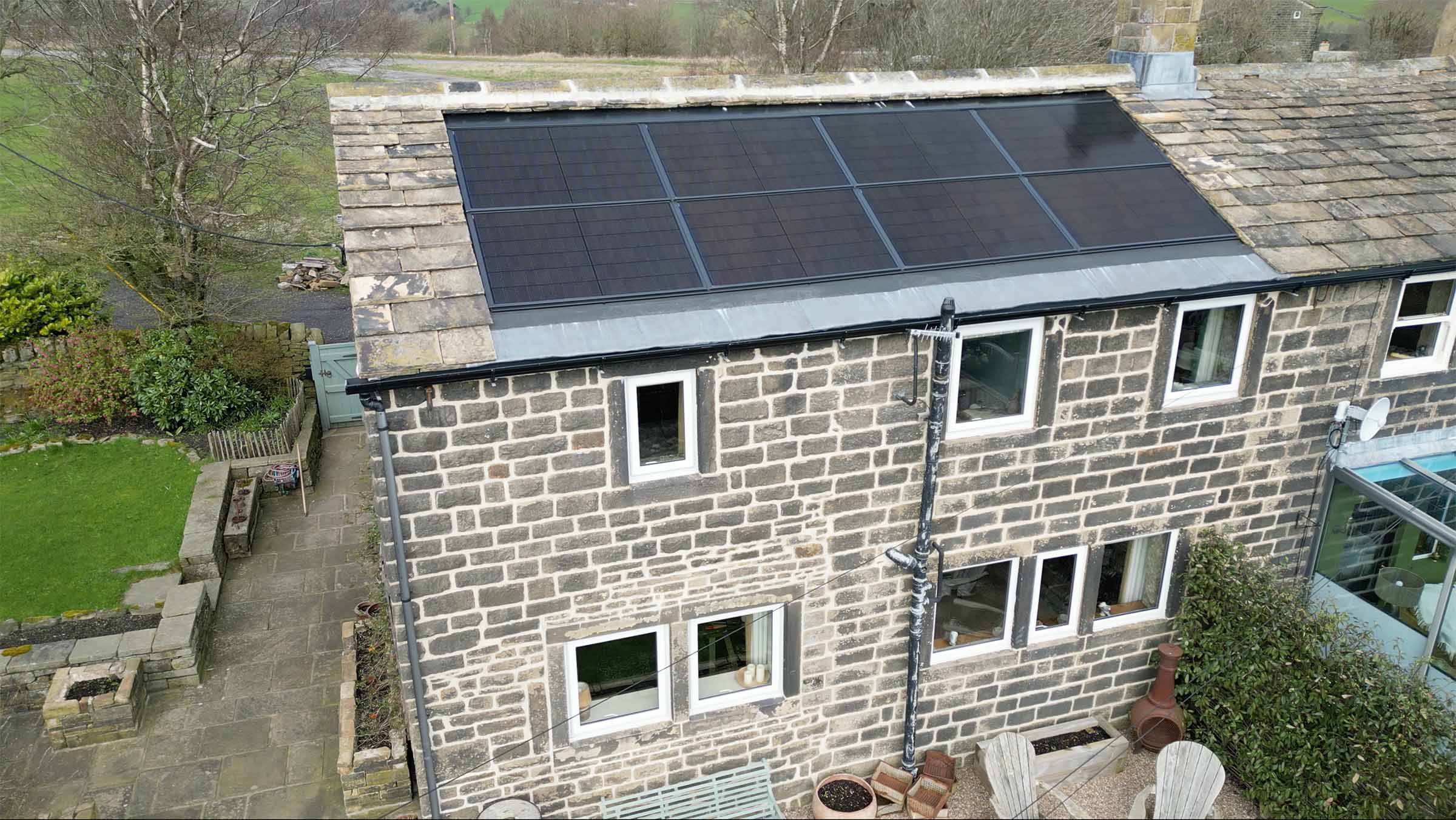
Halifax Renewables also installed a 3.4kW in-roof solar array, taking specialist care to integrate the panels seamlessly into the thick Yorkshire stone roof tiles, retaining look and charm of the property exterior.
“It sounds a bit of a cliche, but it was actually a transformation.”
Tony
Customer feedback
Tony reports that the system has entirely transformed how the home feels.
Instead of the extreme hot-and-cold cycles of his old boiler, the heat pump provides a gentle, continuous warmth that has eliminated the damp feeling in the house.
The system effectively balances the temperatures across the property, perfectly managing the rooms exposed to extreme wind chill while keeping bedrooms slightly cooler, exactly as designed.
Furthermore, the heat pump operates incredibly quietly – it can barely be heard from three metres away, perfectly preserving the tranquillity of Tony’s rural location.
Key highlights from this project:
1. The heat pump’s efficiency has exceeded design expectations by roughly 20%, achieving performance levels that rival some modern new builds.
2. By the spring, Tony reported a significant reduction in his monthly energy bill compared to the previous year.
3. The solar array generates around 3,000kWh annually. Energy not consumed by the building is exported to the grid, which Tony is paid for as part of his tariff.
Do you have a project like Tony?
Get a free quote
with us in minutes.
Informed decisions are good decisions.
With nearly two decades of industry experience, Halifax Renewables are well-placed to give you the solid advice and information you need.
Whatever project you have in mind, do it once, and do it right.
Until the end of 2027, the Boiler Upgrade Scheme (BUS) supports the decarbonisation of homes, as well as small and medium non-domestic buildings, in England and Wales, with upfront grants of £7,500 available.
Yes. Rather than guessing or over-specifying, we take a rigorous, data-driven approach by analysing historical metering data to establish the true peak load of the building.
We prioritise using local trade suppliers and reinvest the funding directly back into the community by creating new permanent jobs and supporting new apprenticeships.
Yes, we are increasingly engaged in large-scale public sector decarbonisation projects. We have successfully designed and installed highly complex commercial systems.
No, we use a dedicated, entirely in-house team. We do not pass work to subcontractors because we refuse to lose control over the quality of our installations.
A heat pump is a significant upfront investment, but whilst it requires upfront capital, the long-term energy savings can be quite substantial. Contact us for a free quote.
We use cookies to ensure that we give you the best experience on our website. If you continue to use this site we will assume that you are happy with it.